Australian quick reference
CPR: what to do when someone is not breathing normally
A quick Australian guide to starting CPR while help is on the way.
The short answer
Call 000, start chest compressions, add rescue breaths if trained and willing, and use an AED as soon as possible.
Start the emergency pathway
Choose the safest CPR option you can give
If this is happening now, call Triple Zero (000), put the phone on speaker and follow the call-taker. Any CPR is better than delaying while you decide whether you are perfectly trained.
| What applies | Do next |
|---|---|
| Unresponsive and not breathing normally | Call 000 and start CPR. Gasping, grunting or irregular breaths are not normal breathing. |
| Trained and willing to give breaths | Give 30 chest compressions followed by 2 breaths, then repeat with the 000 call-taker's guidance. |
| Unable or unwilling to give breaths | Give continuous chest compressions and follow the 000 call-taker. Compressions are better than doing nothing. |
| AED arrives | Keep CPR going while it is prepared. Attach it as soon as possible, stand clear when told and follow every prompt. |
Four things to remember
See the next decision
These visual cues are a memory aid. In a real emergency, call Triple Zero (000) and follow the call-taker's instructions.
Call 000 and put the phone on speaker.
The person is unresponsive or does not respond normally to voice and touch.
Do not stop repeatedly to check for a pulse.
Anyone who is unresponsive and not breathing normally needs CPR and an immediate 000 call.
Illustrated field notes
See the situation, then choose the next safe action
These original illustrations support recall. They are not a substitute for the written steps, a current first-aid course or the Triple Zero (000) call-taker.
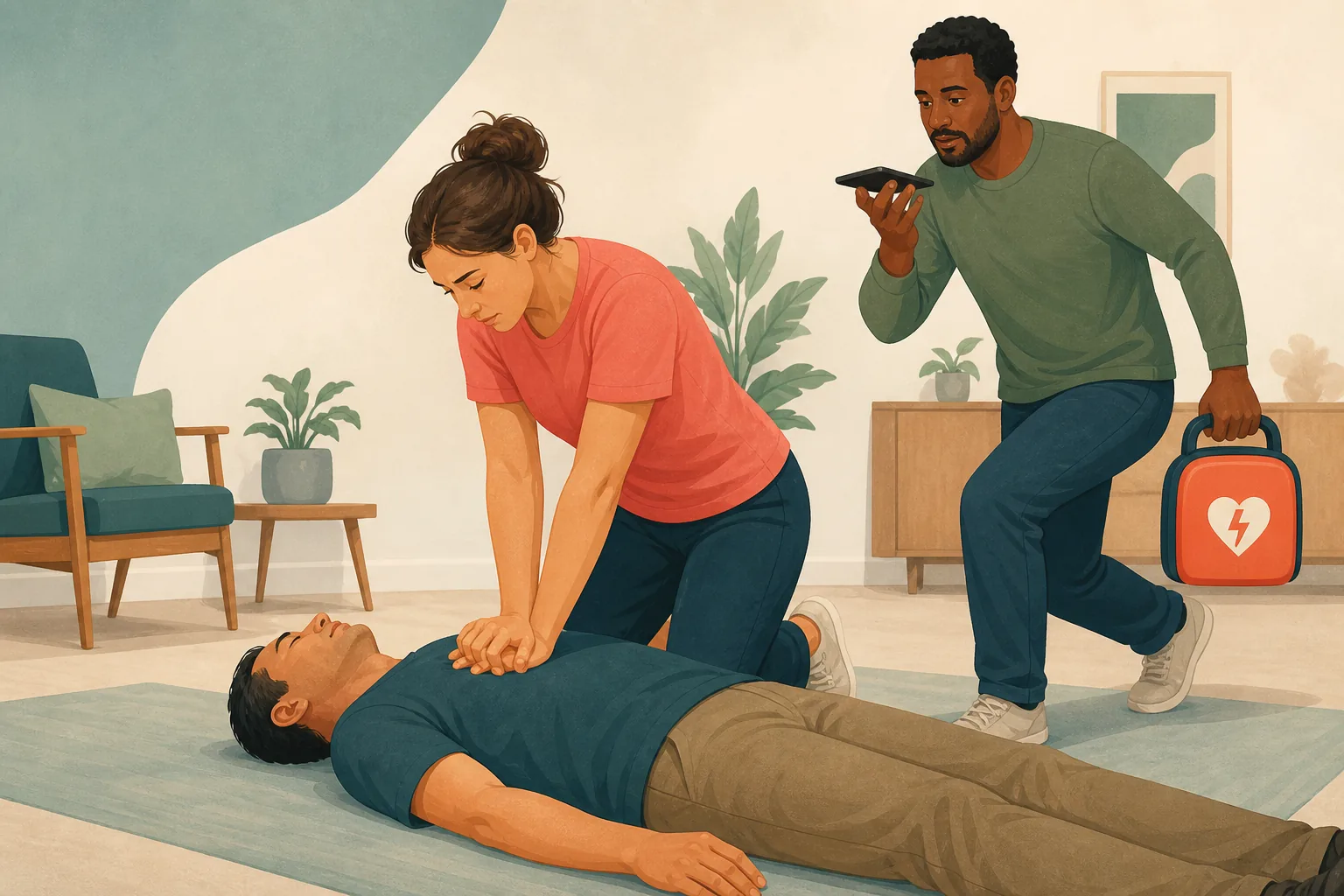
Call 000, start compressions and follow the call-taker.
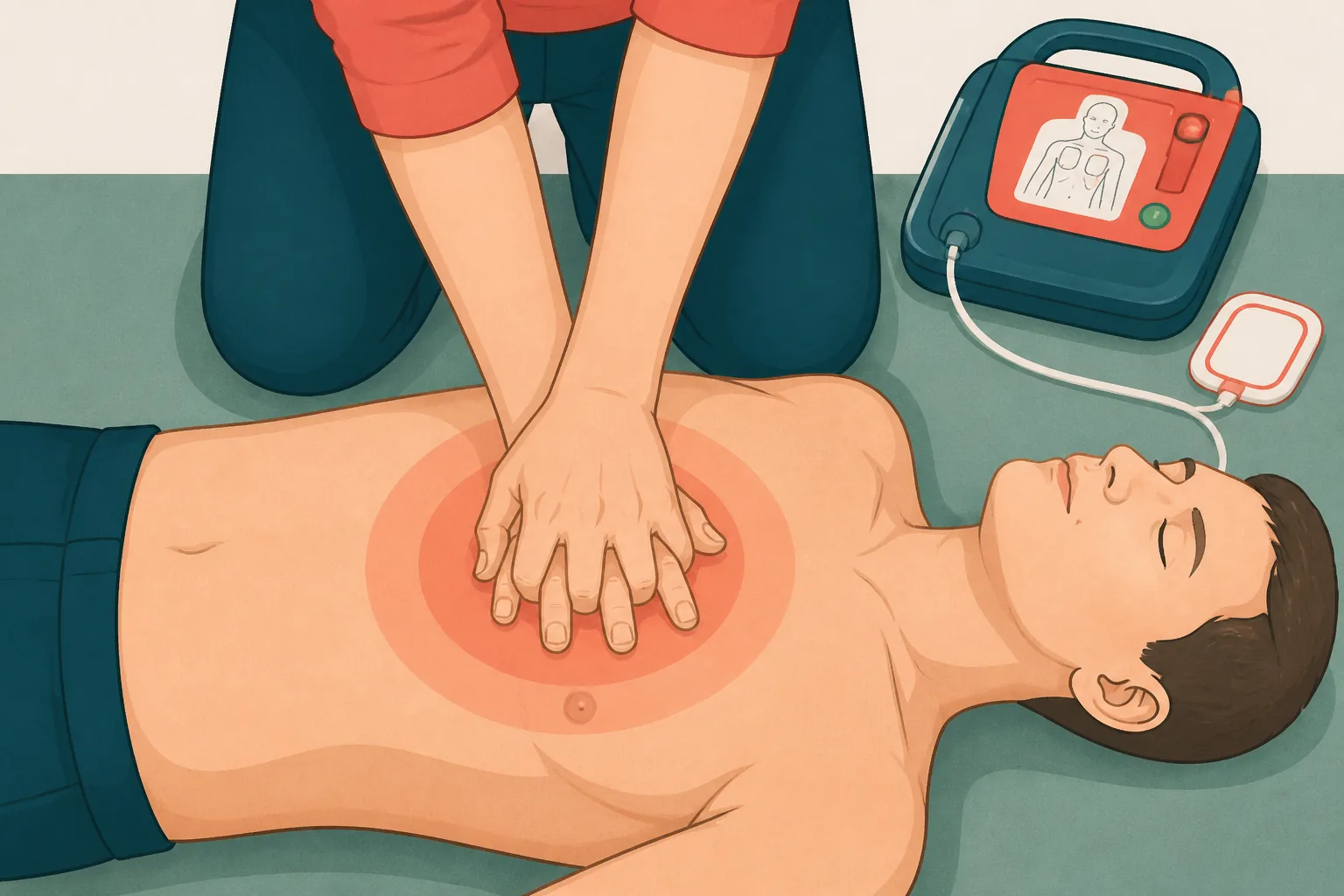
Place both hands in the centre of the chest and keep interruptions short.
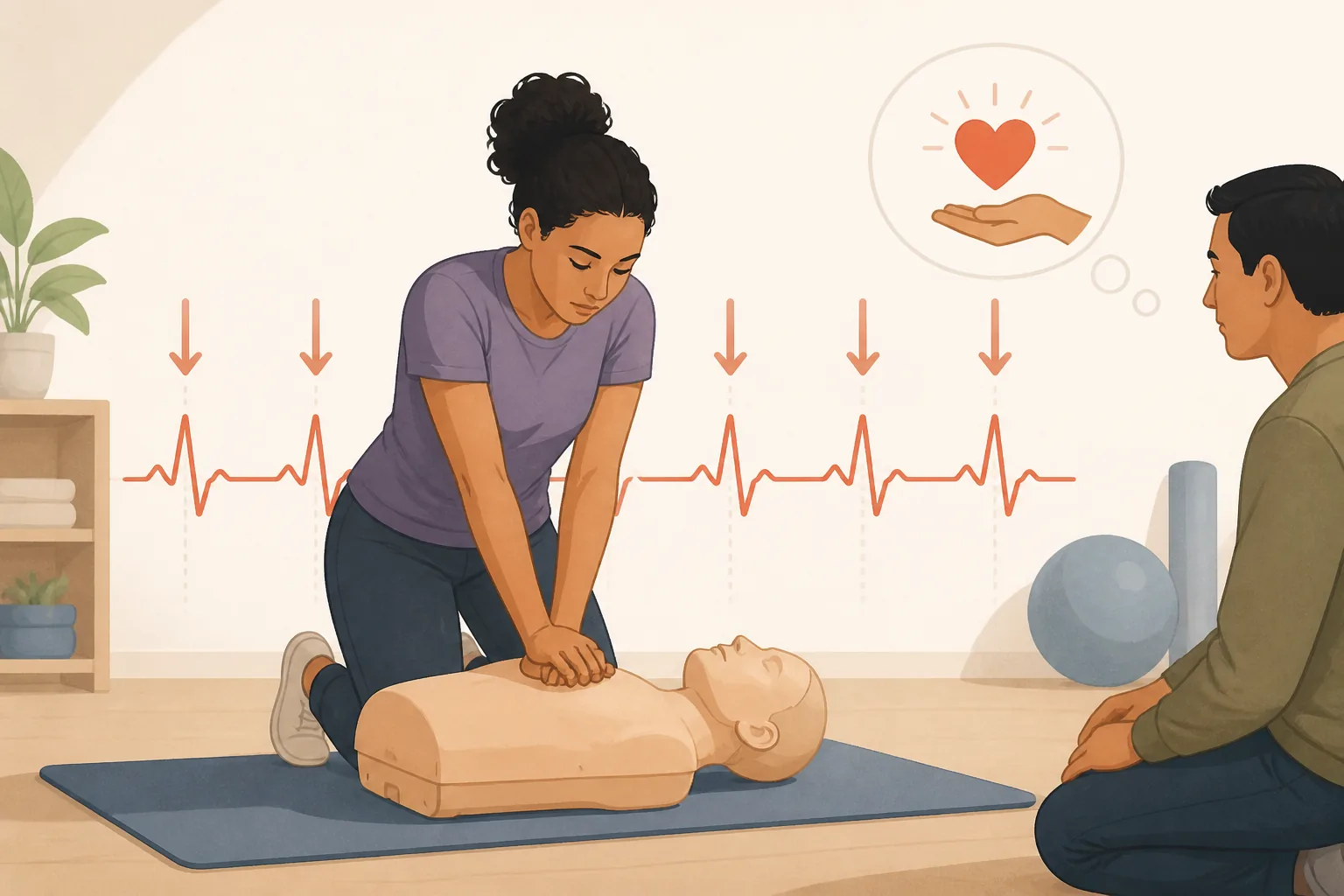
If trained and willing, add breaths; otherwise continue compressions and follow 000.
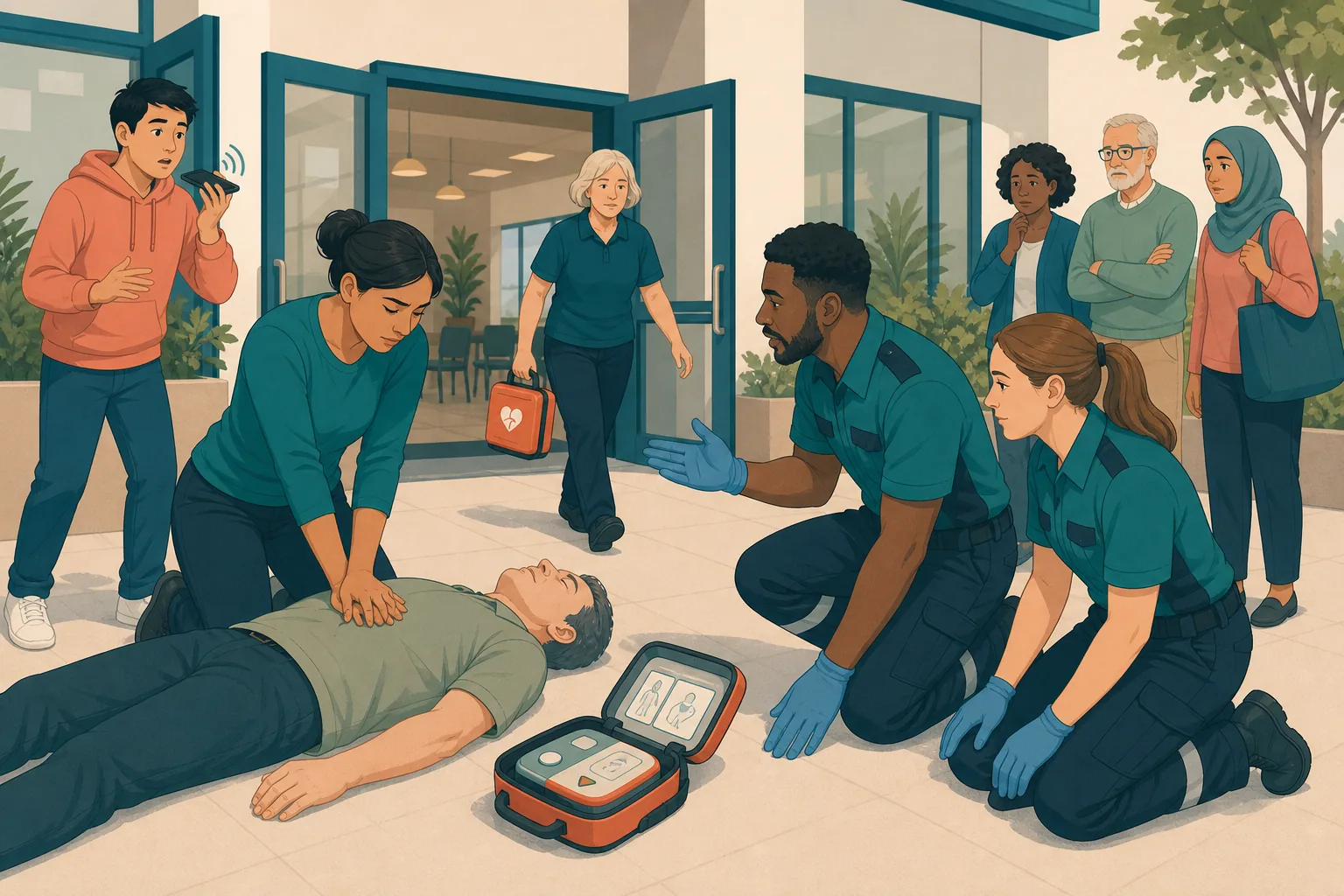
Stand clear during analysis or shock, then restart CPR when the AED says to.
Visual memory cue
See the pattern before you practise
Use this simple visual reminder alongside the written steps. In a real emergency, call Triple Zero (000) and follow the call-taker's instructions.
01
What to do first
- Call 000 and put the phone on speaker.
- Place the person on their back on a firm surface if possible.
- Start chest compressions in the centre of the chest and follow the 000 call-taker instructions.
- If trained and willing, give rescue breaths as instructed.
- Keep going until the person shows signs of life, trained help takes over, you are exhausted or the scene becomes unsafe.
- Attach and follow an AED as soon as it arrives.
02
What to avoid
- Do not stop repeatedly to check for a pulse.
- Do not delay compressions while searching for an AED.
- Do not practise compressions on a real person who is conscious or breathing normally.
03
When to call 000
- Anyone who is unresponsive and not breathing normally needs CPR and an immediate 000 call.
04
What to monitor
- Follow the call-taker instructions and look for signs of normal breathing or movement.
Recognition cues
What you may notice
- The person is unresponsive or does not respond normally to voice and touch.
- They are not breathing normally, or they are making occasional gasps, grunts or other abnormal breathing sounds.
- There may have been a sudden collapse, but cardiac arrest can also be unwitnessed.
- The person may look pale, blue or still; do not wait for a perfect diagnosis before starting the emergency pathway.
Avoid these traps
Common mistakes
- Delaying the 000 call while searching for more information or an AED.
- Stopping compressions repeatedly to check for a pulse, response or breathing.
- Deciding not to start CPR because rescue breaths are not possible or the rescuer is not trained.
- Using a slow or interrupted rhythm instead of firm, continuous compressions while following the call-taker.
- Failing to attach an AED as soon as it arrives or touching the person during analysis or shock delivery.
Use the child or infant CPR instructions provided by the 000 call-taker rather than applying adult assumptions. For children and infants, use paediatric AED pads or a child setting when available. If they are unavailable, follow the device and call-taker instructions about using an adult AED. Rescue breaths and compression technique can differ by age; use speakerphone and follow the real-time instructions.
When help is on the way
Keep the handover useful
- Continue CPR until the person responds or begins breathing normally, a health professional takes over, you are unable to continue, the scene becomes unsafe or the call-taker directs you to stop.
- If normal breathing returns, stop compressions, keep monitoring response and breathing and follow the 000 call-taker instructions.
- Tell responders when CPR began, whether rescue breaths were given, when an AED was attached and whether a shock was delivered.
Practise the pattern
Make it easier to remember
Common questions
Quick answers
Do I have to give rescue breaths?
If you are trained and willing, include them. If not, start chest compressions and follow the 000 call-taker.
Can CPR restart a heart?
CPR keeps blood and oxygen moving while emergency treatment is arranged. An AED may be needed to treat a shockable rhythm.
What if I cannot give rescue breaths?
Start chest compressions and follow the 000 call-taker. Compressions are still important when rescue breaths are not possible or the rescuer is not willing to give them.
How long should I continue CPR?
Continue until the person responds or breathes normally, trained help takes over, you are exhausted or the scene becomes unsafe, or the call-taker or health professional tells you to stop.
Can CPR hurt someone who is not in cardiac arrest?
Start CPR when a person is unresponsive and not breathing normally. ANZCOR recommends acting because the potential benefit is greater than the low risk of injury from starting CPR when the assessment is uncertain.
When should I start CPR?
Start when a person is unresponsive and not breathing normally. Abnormal gasps, grunts or occasional breaths are not normal breathing.
What if I cannot or do not want to give rescue breaths?
Start chest compressions and follow the 000 call-taker. Compressions are still important when rescue breaths are not possible or the rescuer is not willing to give them.
How long should I continue CPR?
Continue until the person responds or breathes normally, trained help takes over, you are exhausted or the scene becomes unsafe, or the call-taker or health professional tells you to stop.
Can CPR hurt someone who is not in cardiac arrest?
Start CPR when the person is unresponsive and not breathing normally. Australian resuscitation guidance supports acting because the potential benefit is greater than the low risk of injury when the assessment is uncertain.
What changes for a child or baby?
Call 000 on speakerphone and use the child or infant CPR instructions from the call-taker. Do not substitute adult assumptions for age-specific guidance.
Keep it close
Print the reminder
Flagship refinement focused on recognition, immediate action, compression continuity and handover while preserving the existing CPR route, tool, printable and related-guide targets.